Prototype craftsmanship, select according to target
Printing, CNC and molding are not a matter of who replaces whom. First determine whether this round depends on appearance, assembly or function, and then choose materials and processing methods. This can avoid using cheap prototypes to reach wrong conclusions or paying for unnecessary completion.
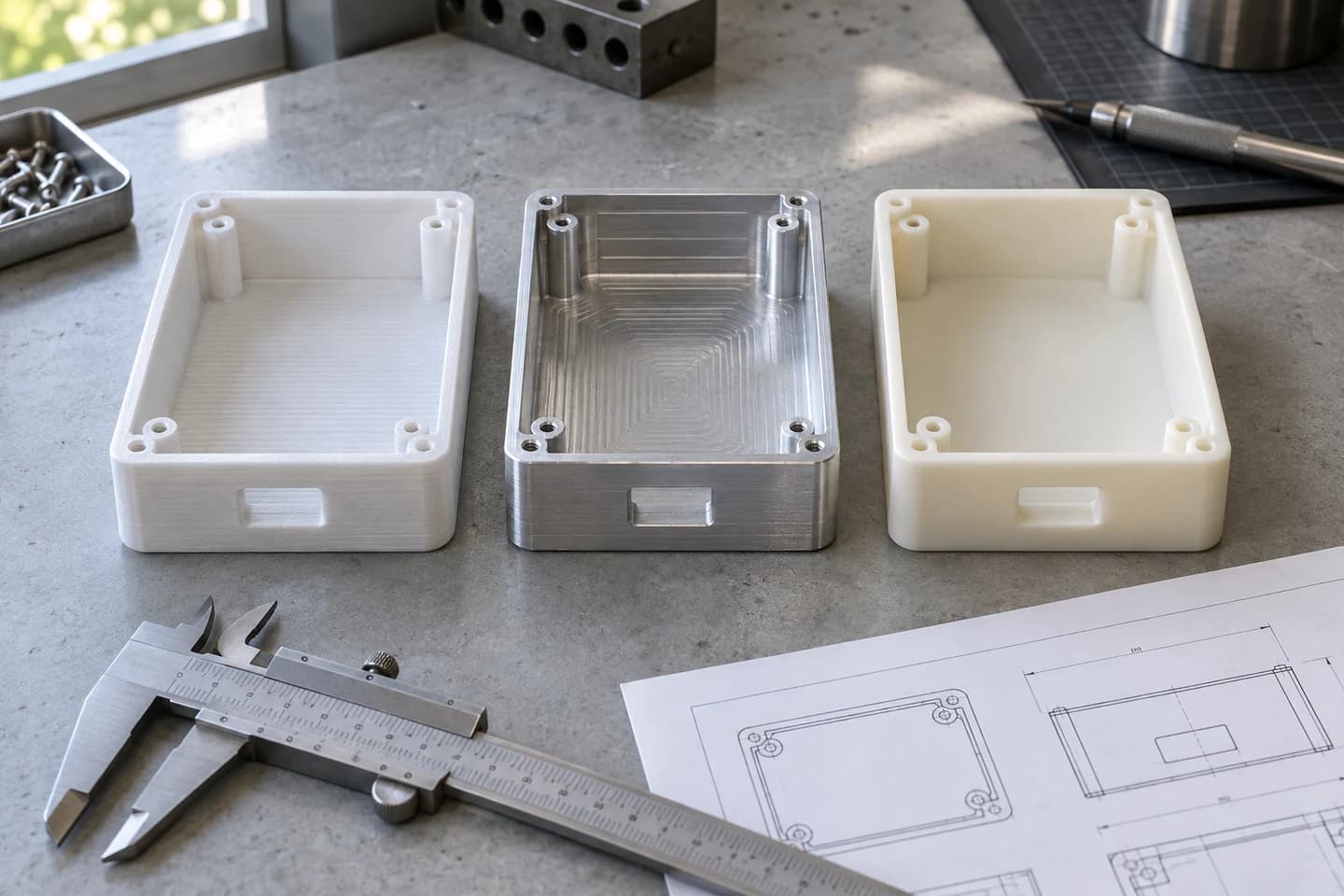
How to choose the process for 3D printing prototype? Make decisions based on verification goals
Let’s look at the conclusion first
- Demonstration models have different requirements than functional prototypes.
- Critical dimensions, materials and post-processing need to be confirmed together.
- Just because a sample passes a certain inspection does not mean that all conditions for mass production are met.
Appearance model, the focus is on visible and tangible
For proportions, grip and surface appearance, prioritize geometry and finishing conditions. A beautiful painted sample does not necessarily represent the production material's feel, wear resistance or long-term behavior.
Agree which details the appearance review must show and which areas are for display only. Explicit labeling prevents sales or decision-making teams from assuming the sample has also passed mechanical and functional validation.
Assembling the prototype, focusing on key relationships
Mark holes, snaps, locating lips, interfaces and fasteners before producing mating parts. Machining direction, supports, post-processing and distortion can alter actual dimensions; an equipment specification alone cannot predict the result.
Prepare required dimensional checks and assembly steps before manufacture. After delivery, record not only whether parts fit but whether they needed extra sanding, forced deformation or a changed sequence. Those observations are feedback for mechanical design.
Functional prototype, focusing on materials and working conditions
Loads, repeated motion, temperature rise and friction require materials and processes appropriate to the test, with real components where needed. Printing materials and processes vary widely; 3D printing is not a material with one fixed set of properties.
Choosing CNC, printing or another trial process also depends on size, quantity, timing and revision frequency. Discuss combinations against the validation plan instead of forcing every question into whichever machine is most convenient.
From prototype to mold opening, there is a review process in between
Passing an assembly check supports moving forward but does not establish stable injection molding or other production processes. Tooling, molding distortion, material batches, cycle time and inspection methods still need confirmation.
At the end of prototyping, hand over the issue list, final revision and unverified items. Separating what is proven from what still needs checking helps customers judge the next investment.
The most suitable prototype is one that can answer the current key questions with reasonable investment. Process selection should be driven by validation goals, not the other way around.
Reference sources and caliber
The product judgments in this article are compiled by the co-creators and do not represent the views of the source institution. Date of verification of statistical and technical data:2026-09-20; When it comes to specific projects, it still needs to be confirmed based on the sample, process and delivery requirements.