When choosing a partner, don’t just look at the renderings
When selecting a product development partner, you can’t just compare renderings and quotations. What is more important is whether the other party can understand who the customer wants to sell to, turn the requirements into engineering conditions, and make it clear who is responsible for connecting prototypes, modifications, and subsequent manufacturing.
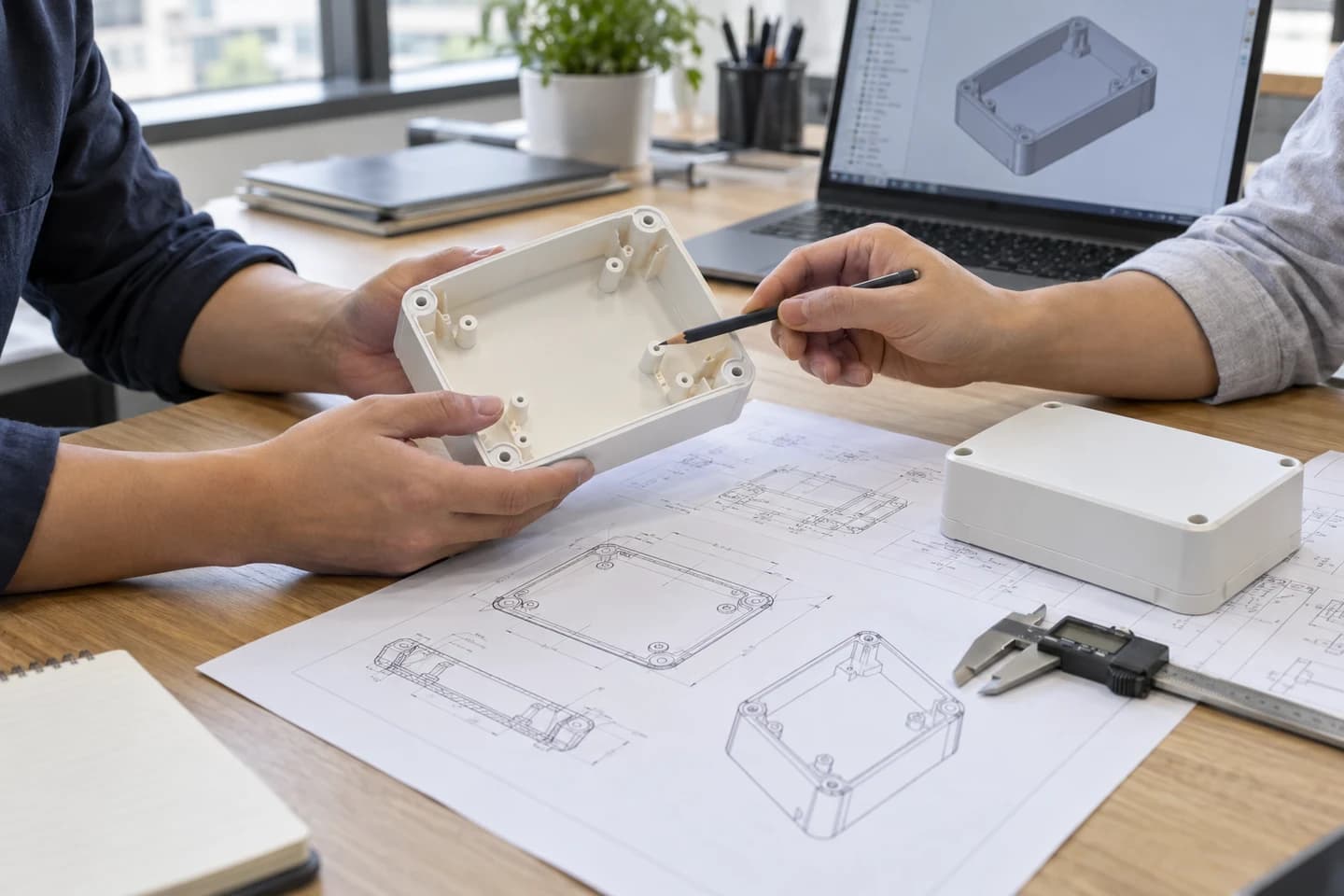
How to choose a product design company in Shenzhen? Let’s look at these five abilities first
Let’s look at the conclusion first
- Look at the requirements understanding first, and then the solution presentation.
- Compare suppliers using deliverables and responsibility boundaries.
- Build collaboration on small-scale tasks with acceptance criteria.
See what questions the other party asked
A discussion limited to colors, styles and reference images may not yet address product development. More useful questions include who uses it, where, what fails in the existing solution, which sales channel is planned and what cannot change.
Specific early questions make later proposals easier to evaluate. Customers need not arrive with a perfect brief, but the team should turn scattered ideas into clear objectives and distinguish assumptions from confirmed facts.
Check whether the case is relevant to the task
Attractive examples help assess taste, but also ask what work the supplier performed, which stage was delivered and what remained between the image and manufacture. Processes, mechanisms and environments differ substantially between projects.
For a sample without data, capture work and engineering models may be more relevant than concepts. For a new product, the connection between appearance, component layout and prototypes matters more. Awards and gallery size are not substitutes for capabilities relevant to your task.
Look at the delivery list and responsibility boundaries
Confirm whether requirements work, concepts, mechanical files, drawings, prototypes, tools and pilot production are included. Also agree file formats, revisions, intellectual property terms and how component or requirement changes will be handled.
One-stop service does not mean unlimited scope. Reliable cooperation makes it clear who does what, when reviews occur and what counts as completion. Testing, certification, purchasing and production quality particularly need explicit responsibility.
Make an evaluable cooperation first
For a first collaboration, choose a bounded task such as reconstructing an existing part, making a local mechanical change or running one prototype validation round. This puts communication, delivery and problem handling to a practical test.
We want a visible process: documented requirements, versioned files and named issue owners. Compared with a promise to do everything, this gives customers a better basis for deciding whether to entrust the next stage to the same team.
Choosing a R&D partner is choosing a way to solve problems together. Only by being able to clearly explain requirements, delivery, and responsibilities will we be able to turn a good-looking plan into a product that can continue to be promoted.
Reference sources and caliber
The product judgments in this article are compiled by the co-creators and do not represent the views of the source institution. Date of verification of statistical and technical data:2026-09-20; When it comes to specific projects, it still needs to be confirmed based on the sample, process and delivery requirements.
This article is the R&D collaboration suggestions of the co-creators and does not cite external market size or revenue forecast data.