Adapt first, then talk about styling
The expansion of the vehicle market does not mean that any accessories can be universal. For car interiors, brackets, trim parts and vehicle-mounted equipment, model boundaries, installation standards and reassembly verification determine whether a piece of design data can truly enter the next step.
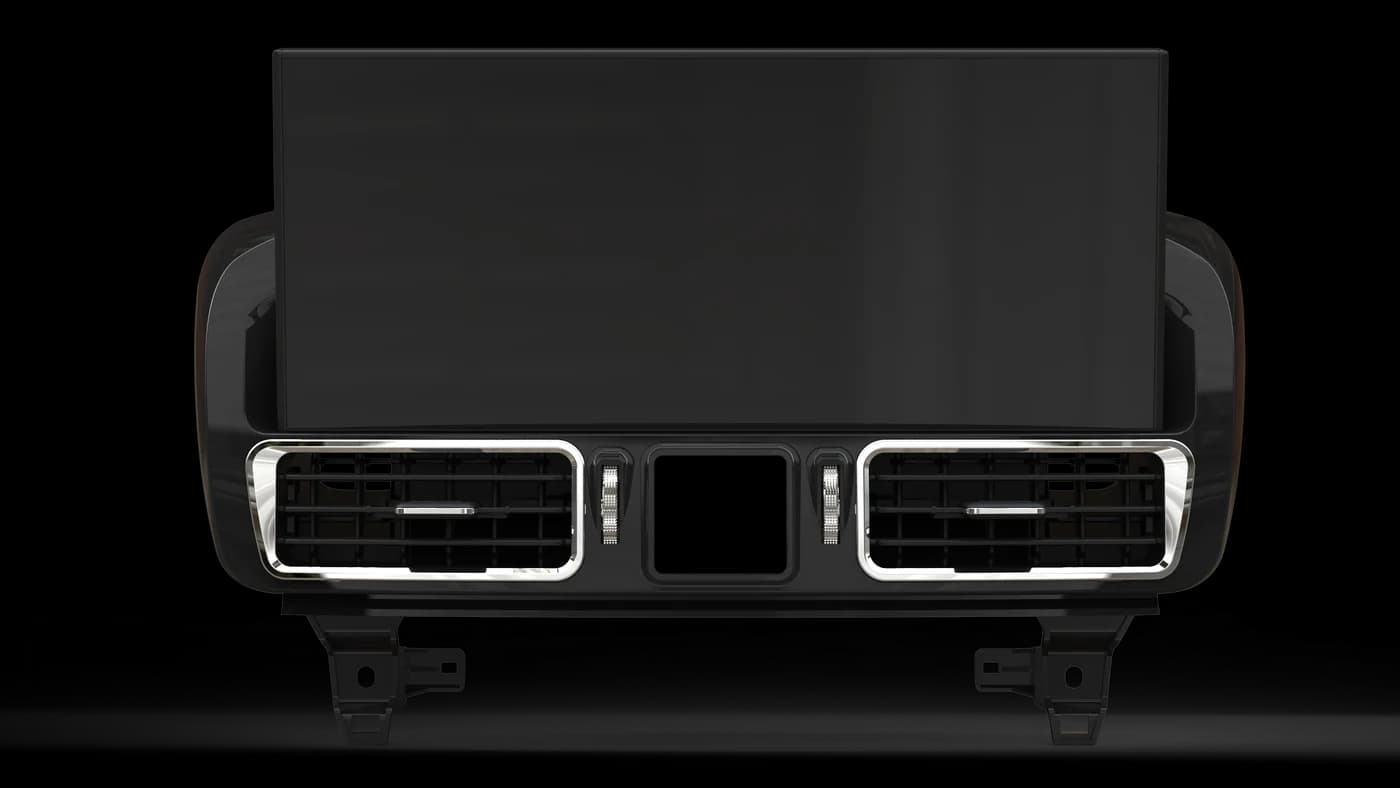
With the growth of new energy vehicles, why should component development focus on adaptation first?
Let’s look at the conclusion first
- Industry sales growth is not an order forecast for individual parts.
- First confirm the car model, year and installation relationship, and then build a usable model.
- Matching appearance does not mean reliable assembly, and the sample needs to be returned to the actual position for verification.
To see growth, we must also see product boundaries
CAAM data published by China's Ministry of Industry and Information Technology puts 2025 new-energy vehicle sales at 16.49 million, up 28.2% year on year. This is an automotive industry sales measure—not domestic registrations and not sales of a particular accessory or modification part.
Market shifts open a window for research, but an opportunity must be specific to a vehicle, user and installation location. An interior organizer, a console enclosure and a device bracket have different space, operation and assembly problems. Being a new-energy vehicle accessory does not make one development approach suitable for all of them.
In addition to growth, look at adaptation
China’s annual sales volume of new energy vehicles·Caliber of China Automobile Association
Data table and statistical caliber
| Statistical items | value (Ten thousand vehicles) |
|---|---|
| 2024 | 1286.6 |
| 2025 | 1649.0 |
It is the automobile sales statistics of the China Association of Automobile Manufacturers, which is not equal to the domestic terminal retail sales or registration volume, including export caliber. The year-on-year growth rate is 28.2% in 2025; this does not mean that every type of auto parts will grow at the same rate.
Lock the car model and adjacent parts first
The same vehicle name may cover different model years, trims and supply revisions. Define compatibility, record the sample vehicle or part version, and confirm disassembly permissions, adjacent parts that must remain and whether installation would obstruct existing operations.
We prioritize mounting points, assembly datums, available space and moving-part clearance—not just the most visible exterior. Covering several versions requires collecting their differences; one sample does not justify a claim of compatibility with every model.
The scan is complete, but it does not mean that it can be manufactured directly.
Surface scans help capture complex curves and overall contours, but mounting holes, mating faces, thin walls and deep cavities may require additional measurement. SHINING 3D's Scan-to-CAD information also distinguishes scan processing from engineering reconstruction. Changing a filename extension does not perform that work.
Agree which surfaces follow the sample, which features must recover design relationships, and which wear or distortion should not be copied. Specify deliverables through datums, dimensions and intended file use, not simply a request for a very accurate model.
Let the verification go back to the actual installation location
A part that looks aligned by itself may not fit correctly with adjacent components. Check insertion sequence, clearances, fastening, servicing, harness space and interference during normal operation. Safety-related vehicle features require suitable specialist validation; a reverse-engineered model is not a substitute for safety evidence.
Check mounting and appearance with samples before committing to tooling or machining. Record each reinstallation revision and issue so the customer can distinguish measurement-input problems from modeling decisions or manufacturing deviations.
Only with solid adaptation can we have a foundation for series development.
Only once datums, interfaces and revisions are clear can a product family share components, replacement parts and appearance variants. Otherwise platform development risks reproducing the same incompatibility across later products.
Where a physical sample exists but drawings are missing, we can begin with scanning and modeling, then coordinate mechanical modifications, prototypes and manufacturing. The result is not just a rendering but an input that can be reviewed, revised and tested.
Opportunities for automotive products lie in specific models and specific issues. Only by getting the adaptation right first and then making the shape complete can the uncertainty of subsequent mold opening and assembly be reduced.
Reference sources and caliber
The product judgments in this article are compiled by the co-creators and do not represent the views of the source institution. Date of verification of statistical and technical data:2026-09-20; When it comes to specific projects, it still needs to be confirmed based on the sample, process and delivery requirements.
- Economic operation of the automobile industry in December 2024 ↗Ministry of Industry and Information Technology; data from China Association of Automobile Manufacturers · 2025-01-13
- Economic operation of the automobile industry in December 2025 ↗Ministry of Industry and Information Technology; data from China Association of Automobile Manufacturers · 2026-01-14
- Geomagic Design X: From scanned data to CAD ↗SHINING 3D