Ease of use comes before many functions
Demographic changes make senior care and home care worthy of long-term attention, but “for the elderly” is not a complete product definition. Being able to see clearly, hold it, not operate incorrectly, and being easy to clean are often more worthy of verification than adding another function.
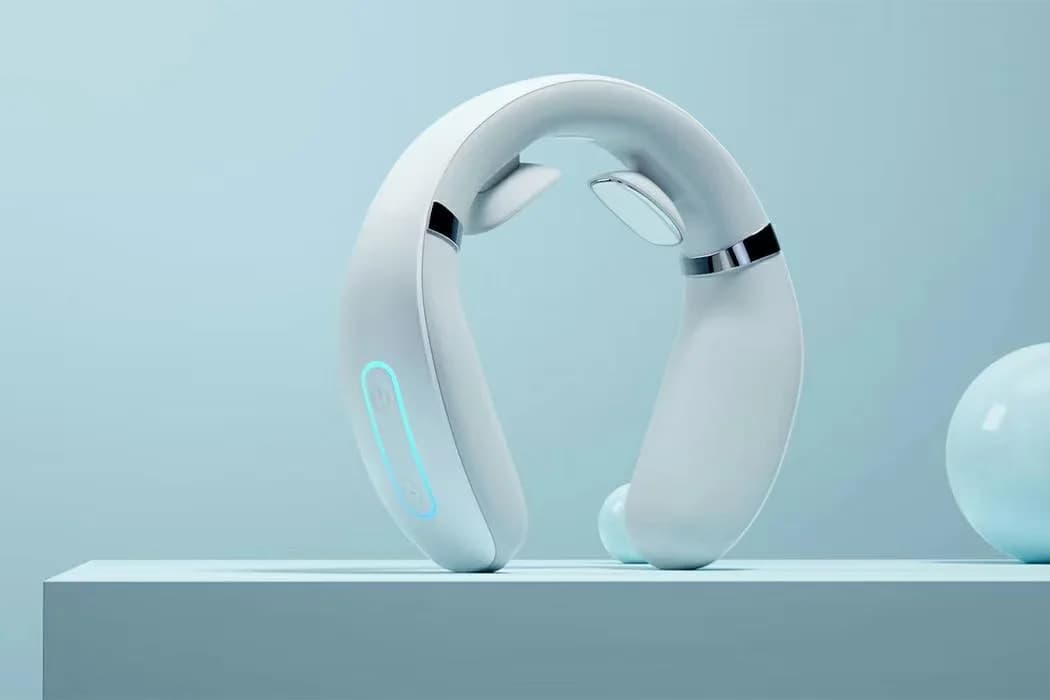
For silver hair and home care, what kind of experience should the product provide first?
Let’s look at the conclusion first
- Age is not the only basis for grouping, but also depends on operational ability and usage environment.
- Button feedback, holding, reading, and cleaning should go into prototype testing.
- Assisted living and medical purposes need to be distinguished, and the shape should not be used to imply therapeutic effects.
Demographic changes are background, not a list of needs
According to the National Bureau of Statistics, China's population aged 60 and above reached 323.38 million at the end of 2025, or 23.0% of the total, compared with 22.0% in 2024. This supports attention to age-related experiences, but cannot be directly converted into the market size of a particular care device.
People of the same age can differ in vision, hand strength, habits, family support and budget. Segment users by their ability to perform a task and distinguish independent, family-assisted and staff-operated use. An age-friendly label on packaging does not establish a need.
Users are changing
National population aged 60 and above as a proportion of the total population · Year-end caliber
Data table and statistical caliber
| Statistical items | value (%) |
|---|---|
| 2024 | 22.0 |
| 2025 | 23.0 |
The corresponding populations are 310.31 million and 323.38 million respectively. Both years refer to people aged 60 and above and cannot be mixed with the population aged 65 and above; the population ratio is not the medical device purchase rate.
Provide clear feedback for every step of the operation
A large screen is not automatically easier to use. Small status messages, unclear icons or complex back-navigation can still leave users unsure whether a device has started. For frequent tasks, consider physical controls, tactile differences and clear feedback.
Map the complete sequence: unpack, position, switch on, select, use, finish and store. Identify steps that require instructions and states that are easily misunderstood. Where mechanical or interaction design can reduce confusion, do not leave the entire burden to after-sales explanations.
Treat holding and cleanliness as structural issues
Products in the home are moved, stored and repeatedly cleaned. A center of gravity away from the grip, awkward cables, dirt-trapping grooves or difficult disassembly may be invisible in renders yet strongly influence willingness to keep using the product.
Connect appearance reviews with physical checks. Use a model close to the intended dimensions and weight to test lifting, placement and control reach, then assess durability against the chosen materials, cleaning method and assembly. A prototype finds issues; it is not a finished product that has already met every use and safety condition.
First clarify the purpose of the product, and then determine the development boundaries
Daily personal care, assisted living and medical use are different concepts. At project start, clarify intended use, users, functions and promotional claims. Customers and appropriate specialists must confirm applicable requirements for medical or otherwise regulated functions.
The design team can support appearance, mechanics, ergonomics and prototype validation. A white enclosure, professional-looking interface or rendering does not demonstrate medical performance. This article discusses design decisions, not treatment advice, and does not replace classification, testing or registration work.
Select improvements worth making first from real tasks
Rather than developing many functions at once, improve the most frequent or error-prone tasks first. Let intended users operate the product and record pauses, handling, assistance needed, and how easily they clean and store it afterward.
For an existing product, XCR can start with measurement and mechanical changes. For a new product, review interface layout, grip proportions, connections and internal components together. Establish improvements users can notice before expanding functions.
What we value is not the label “age-friendly”, but the user’s ability to complete specific tasks independently, clearly, and comfortably. Product opportunities need to be proven by real-world experience.
Reference sources and caliber
The product judgments in this article are compiled by the co-creators and do not represent the views of the source institution. Date of verification of statistical and technical data:2026-09-20; When it comes to specific projects, it still needs to be confirmed based on the sample, process and delivery requirements.
- Interpretation of population development in 2024 ↗National Bureau of Statistics · 2025-01-17
- Interpretation of population development in 2025 ↗National Bureau of Statistics · 2026-01-19